
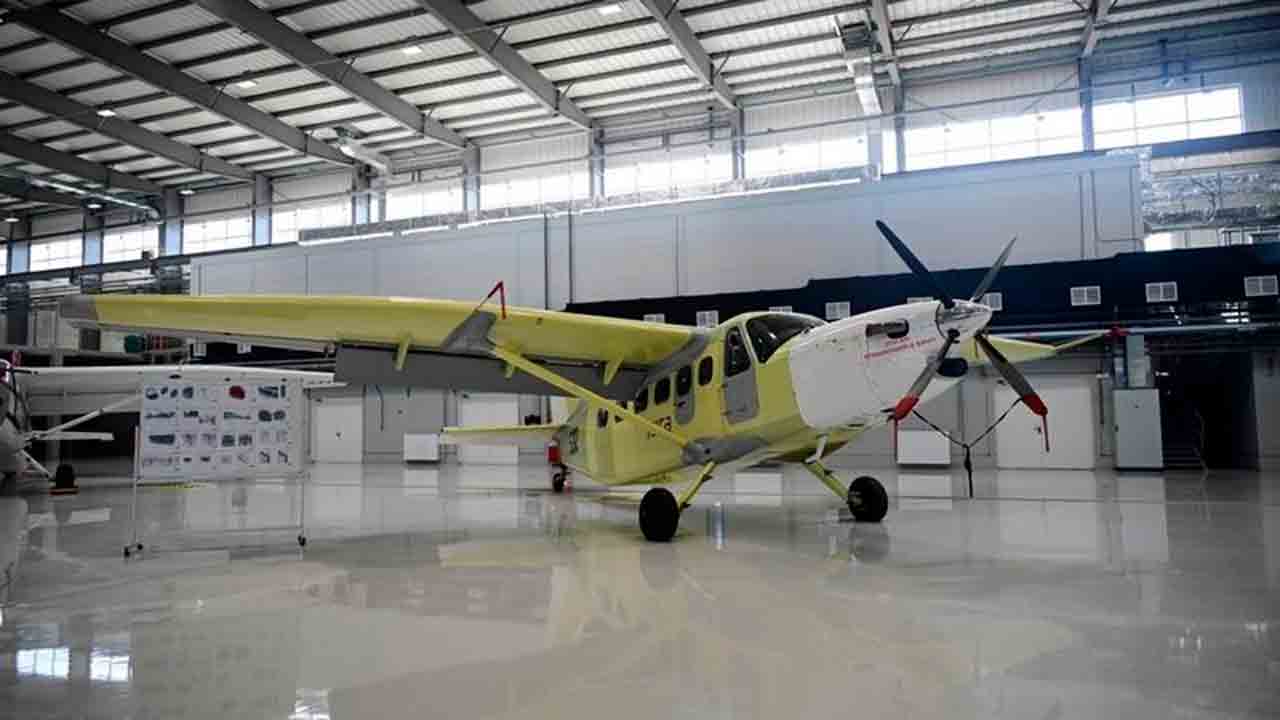
Prototype remains unpainted and awaits modification to install Russian VK-800SM engine and AV-901 propeller
The first photographs have been released of the second experimental flight model of the LMS-901 “Baikal” light turboprop aircraft, developed by JSC “Ural Plant of Civil Aviation” (UZGA). The aircraft, which conducted its maiden flight in 2024, remains unpainted.
+ Latvia Unveils “Fog” Naval Attack Drone with a Range of up to 900 km
Currently, test flights of both constructed Baikal prototypes have been suspended. The aircraft have been transferred for modification, where they will receive the Russian-made VK-800SM engine and AV-901 propeller—components intended to fully nationalize the aircraft’s production and operation.
Since December 2018, the Russian government has been implementing a strategic project in the Titanium Valley to localize the production of light aircraft. Between 2023 and 2024, several new facilities were completed and put into operation in the Uktus area, aimed at the serial production of domestic aircraft models such as the LMS-901 Baikal and the twin-engine TVRS-44 Ladoga.
+ Next-Generation Submarine Technology: Discover the Scorpène Class
These aircraft will form the backbone of short- and medium-range aviation in Russia, gradually replacing outdated models such as the An-2.
Versatile Aircraft for Multiple Missions
The LMS-901 Baikal was designed with operational flexibility in mind. It is a light, multi-purpose turboprop aircraft intended to operate in extreme conditions and on unpaved runways. Its applications include transporting cargo and passengers to remote areas, providing air ambulance services, forestry missions, and various aerial work operations.
The model is emerging as the main domestic alternative to replace the aging Soviet-era An-2 fleet, supporting the modernization of regional aviation and reducing dependence on foreign components.
Source and images: Department of Information Policy of the Sverdlovsk Region
